First record 05.08.1975 Antonova I.M. LID11519 (KPABG). Last record 22.08.2024 Melechin A. LID150077 (KPABG).
First publication Antonova I. (1978). Local IUCN category DD .
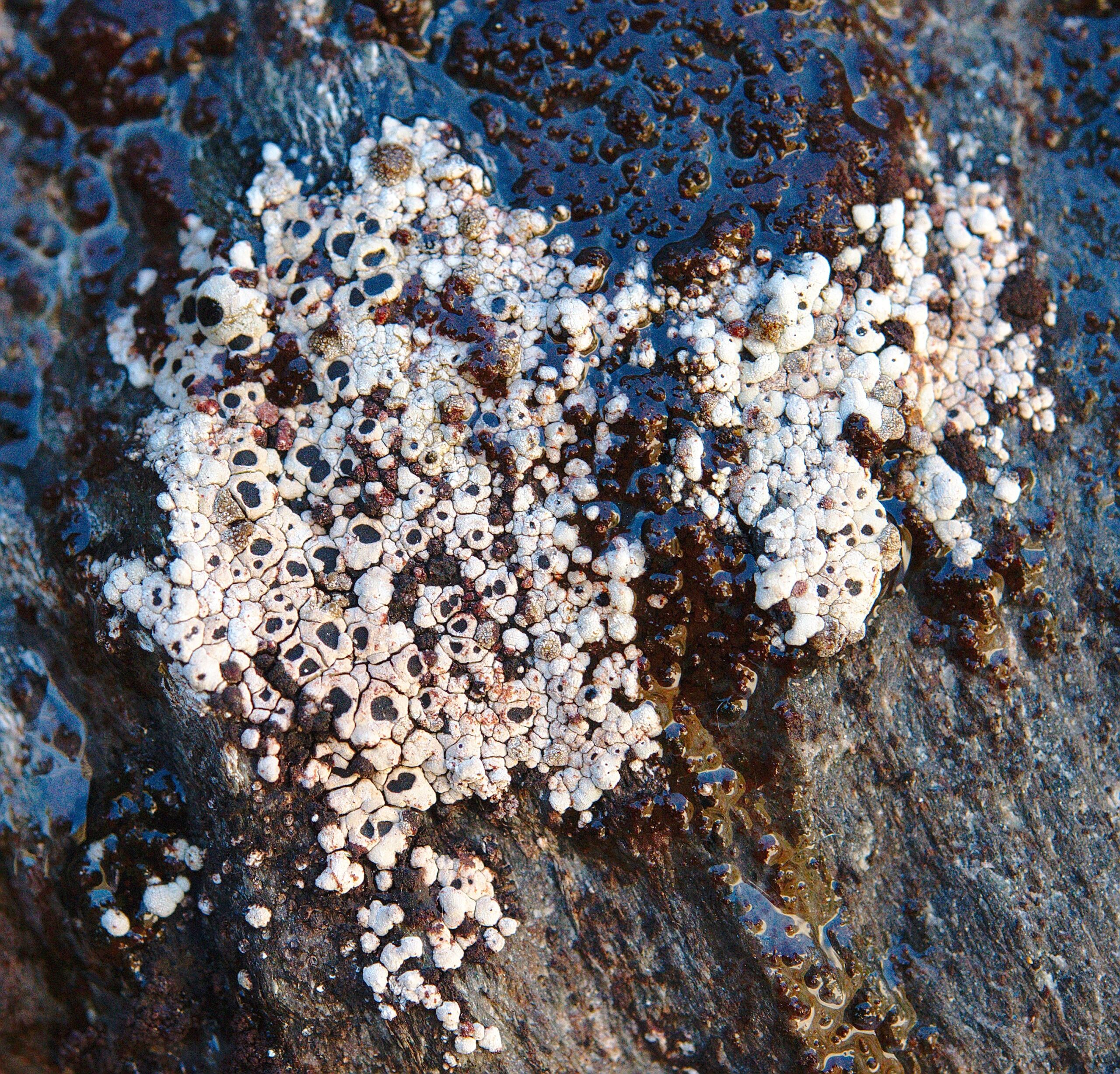
Amygdalaria pelobotryon LID121178
Current name Amygdalaria pelobotryon (Wahlenb.) Norman (Westberg et al., 2021)
Synonims
Morphology (according to Brodo, I. & H. Hertel. (1987) with minor additions and changes). Thallus with yellowish or pinkish tones, esorediate, usually with flat or somewhat convex areoles, becoming rimose-areolate, but sometimes with rounded areoles; cephalodia brown, disk-like to rounded, containing Stigonema (but sometimes with Gloeocapsa). Apothecia mostly depressed into areoles but sometimes flush, usually one per areole, central or at edge of areole giving a pseudo-lecanorine appearance, 0.3-0.5-1.0 mm diam., black, epruinose; hymenium 140-210 um; epihymenium brown; proper exciple thin laterally; hypothecium brown-black, bowl-shaped, usually distinct from excipulum; spores 18-26.0-34 x 9.5-13.5-15.5 um; epispore gelationous, compact or sometimes diffuse. Spot tests: KC+, C+ red, K-, P-.
Ecology. On frequently wetted rock surfaces (near rivulets, snowbeds etc.). In the region it is found only in the mountains.
Note.